
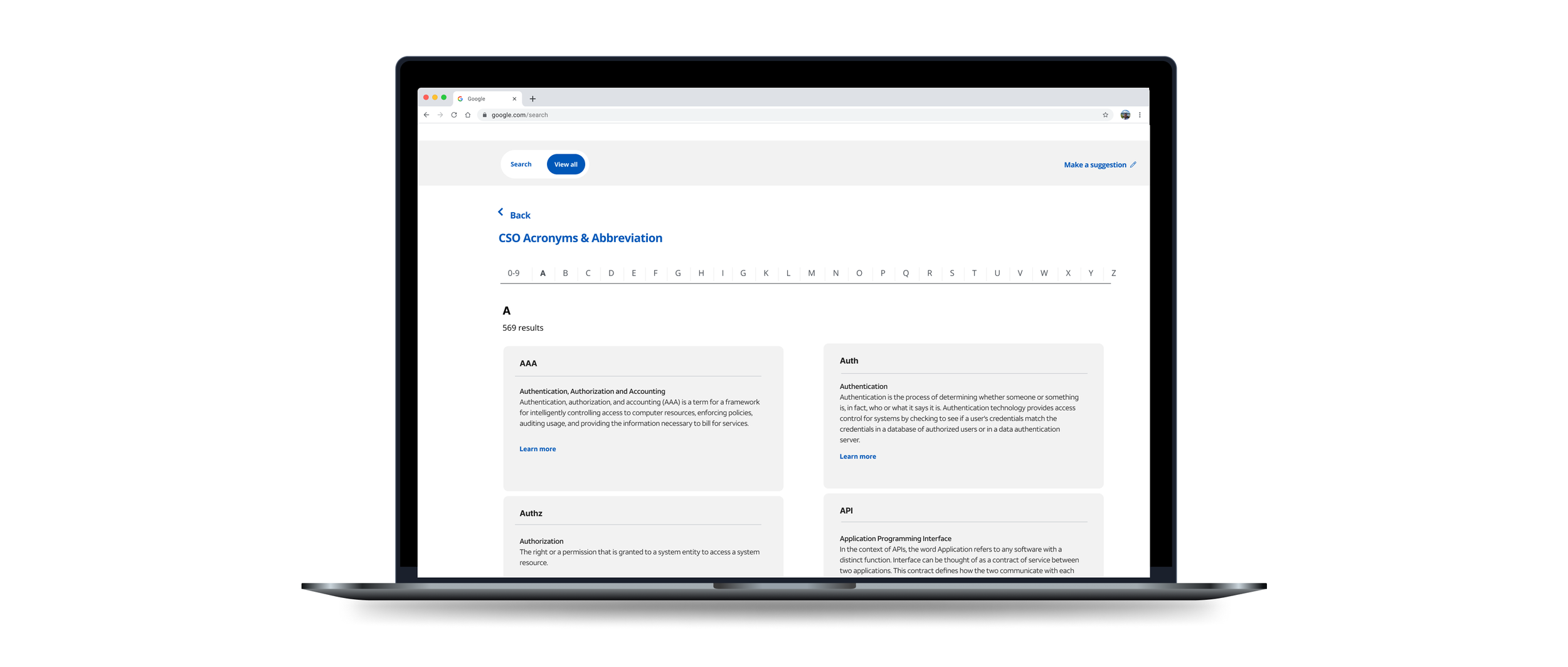
Acronym and Abbreviation Wizard
When I first joined AT&T, I encountered a common challenge: keeping up with conversations that were riddled with abbreviations. It wasn't long before I realized that many of my coworkers were facing the same issue. In the fast-paced world of AT&T, where communication is the cornerstone of efficiency and productivity, the abundance of acronyms and abbreviations can often prove to be a significant challenge, particularly for new employees.Inspired by this shared struggle, I saw an opportunity to make a positive impact. For our team's innovation day, I decided to take action and proposed the concept of an abbreviation finder to enhance communication across teams. Much to my delight, the team embraced my idea, and with the support of my colleagues, I secured the funding needed to bring the project to life. From there, I began collaborating closely with a dedicated product manager, laying the foundation for what would soon become a valuable tool for addressing this challenge and promoting standardized understanding of AT&T's unique language landscape.
Objectives:
As the project lead for the Acronym and Abbreviation Wizard, my key objective is to craft a user-centric experience that simplifies the understanding and usage of AT&T's extensive acronym landscape. By creating an intuitive platform, I aim to enhance interdepartmental communication, boost employee productivity, and foster a collaborative environment where teams can effortlessly contribute their unique acronyms, all while maintaining a fluid and engaging user journey.My Role:
Lead UX DesignerProblems:
- Seamless Discovery and Navigation: How can we create a user interface that facilitates effortless platform discovery and intuitive navigation for employees, including those unfamiliar with digital tools or new to the organization?
- User-Friendly Customization: How can we enable teams to easily add and manage team-specific acronyms without introducing complexity for both administrators and regular users, ensuring a user-friendly customization process?
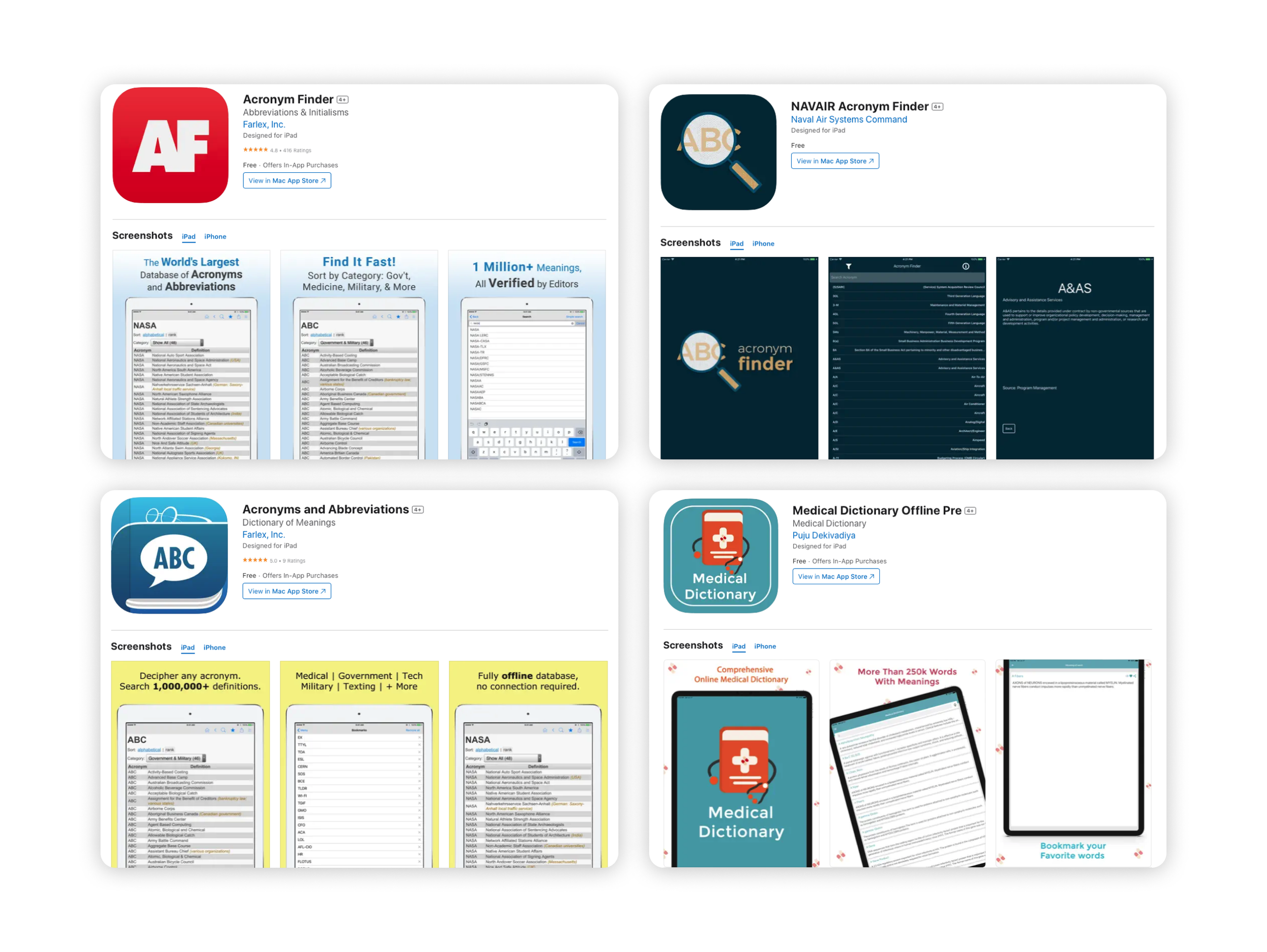
Competitive Analysis Research
During my competitive analysis research, I focused on exploring similar applications available in the market. This allowed me to gain valuable insights into their respective strengths and weaknesses. By closely examining these competing apps, I aimed to understand the diverse strategies they employed to tackle the challenges associated with acronym and abbreviation management.
Through this process, I identified notable advantages such as robust search functionalities, efficient integration with communication tools, and extensive databases. On the flip side, I also observed some drawbacks, including complicated customization processes and limited user-friendly interfaces. This in-depth analysis now serves as a critical foundation upon which I can refine my approach, designing an Acronym and Abbreviation Unifier that effectively addresses the identified limitations while harnessing the strengths observed within the competition.
Ideation
During the ideation phase, my focus was on brainstorming creative solutions that would effectively address the widespread abbreviation challenge at AT&T. Drawing from my own experience and the insights gathered from coworkers, I envisioned a user-friendly platform that would not only decode complex acronyms but also serve as a knowledge-sharing hub for team-specific abbreviations. Collaborating closely with the product manager, we explored various features such as intuitive search functionalities, seamless integration with communication tools, and a customizable interface that would cater to different teams' needs.
Key Features and Implementation:
Database Creation: Curate a comprehensive database by crowdsourcing acronyms from different teams and utilizing existing resources. The database would be constantly updated to accommodate new terms.
Search and Discovery: The user interface would feature a powerful search engine, enabling employees to quickly find definitions and explanations for any acronym or abbreviation.
Team-Specific Additions: A team management feature would allow teams to input their own specific acronyms and maintain their section within the dictionary.
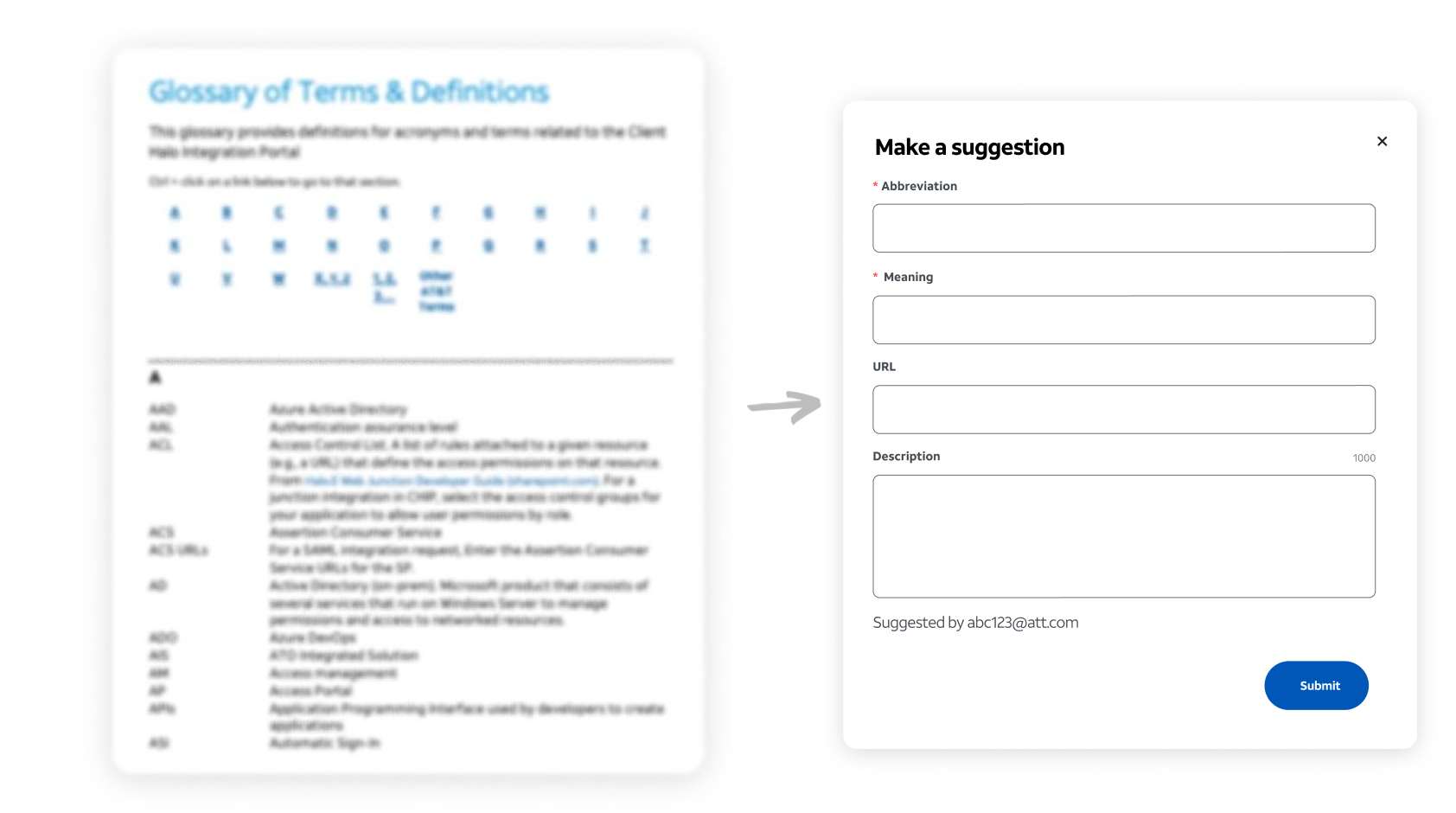
Feedback Mechanism: Implement a system for users to suggest edits, updates, or new entries, thus ensuring the accuracy and relevance of the database.
Benefits and Impact:
Reduced Learning Curve: New employees would experience a smoother onboarding process, as they could quickly familiarize themselves with the commonly used acronyms and abbreviations.
Enhanced Interdepartmental Communication: With a standardized reference point, misunderstandings stemming from acronym confusion would be minimized, improving collaboration across teams.
Time and Productivity Savings: Employees would spend less time deciphering ambiguous messages and more time on productive tasks, ultimately increasing efficiency.
Encouraged Participation: Teams contributing their own acronyms would feel a sense of ownership, leading to increased engagement with the platform.
Continuous Improvement: The feedback mechanism would foster an environment of ongoing improvement and refinement of the acronym dictionary.
Challanges
One significant challenge we recognized was collecting and maintaining a comprehensive database of acronyms and abbreviations. To overcome this hurdle, I proposed a future-ready solution where everyone could suggest new abbreviations along with their full meanings and supporting sources. These suggestions would then undergo a review process before being added to the official database, ensuring accuracy and relevance. By embracing this collaborative approach, we aimed to create a living database that evolves with the organization's terminology, ultimately enhancing the platform's utility and longevity. Through innovation and teamwork, our goal was to bridge communication gaps, empower new employees, and streamline information flow across the organization.
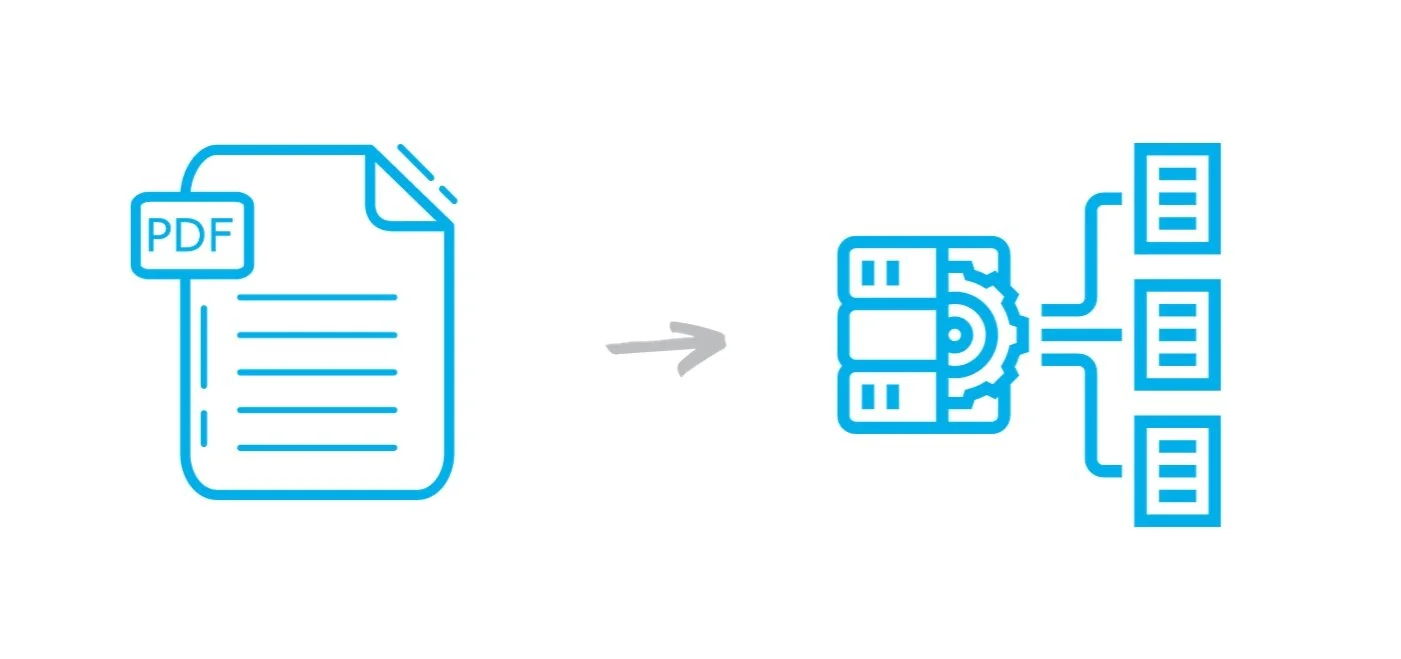
Collaboration with content writer to create a robust initial database
Collaborating closely with content writers and user guide creators, I'm actively engaged in crafting the initial database for the abbreviation platform. This joint effort ensures accurate and user-friendly definitions for each acronym and abbreviation. By tapping into their expertise, we're building a strong foundation that aligns precisely with AT&T's needs, resulting in a valuable resource for employees seeking clarity in their communication.
* Intentionally Blurred Image
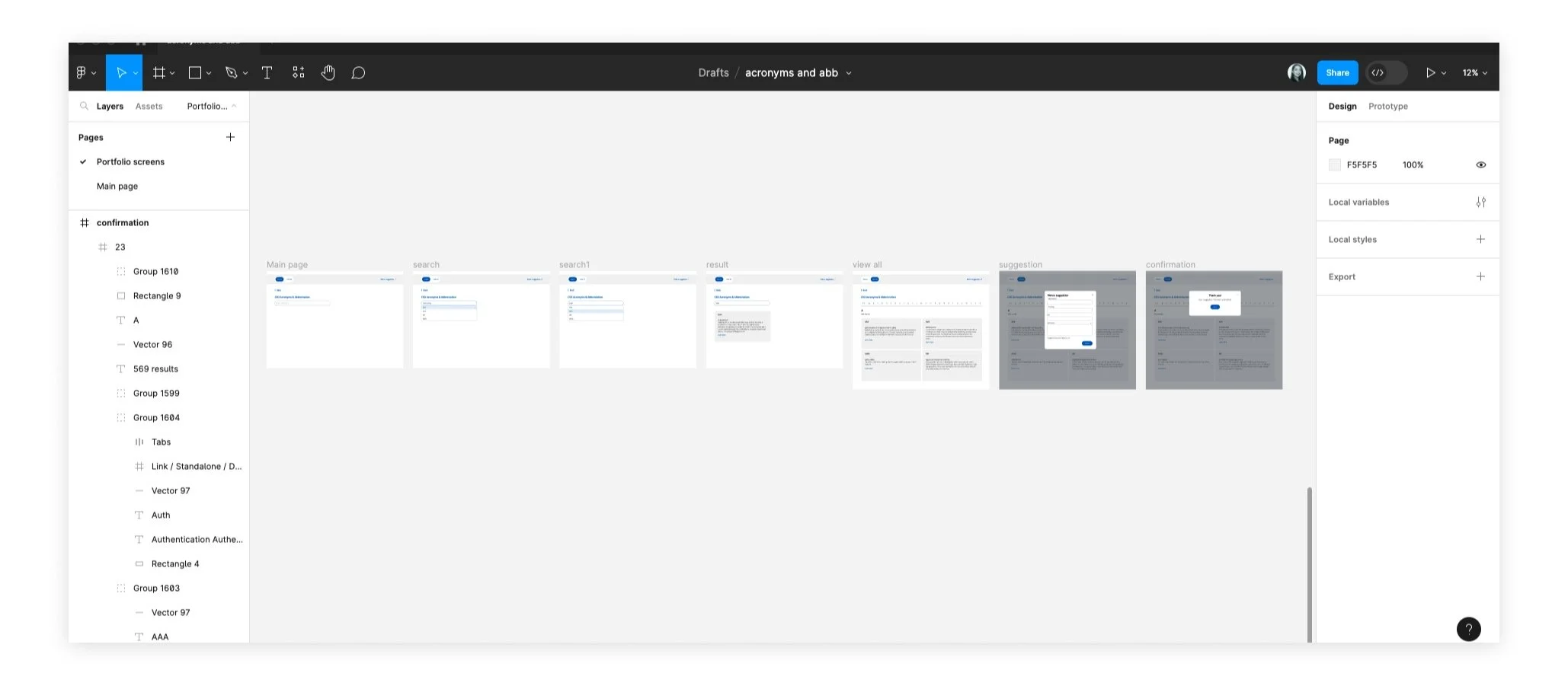
Starting the ideation on Figma
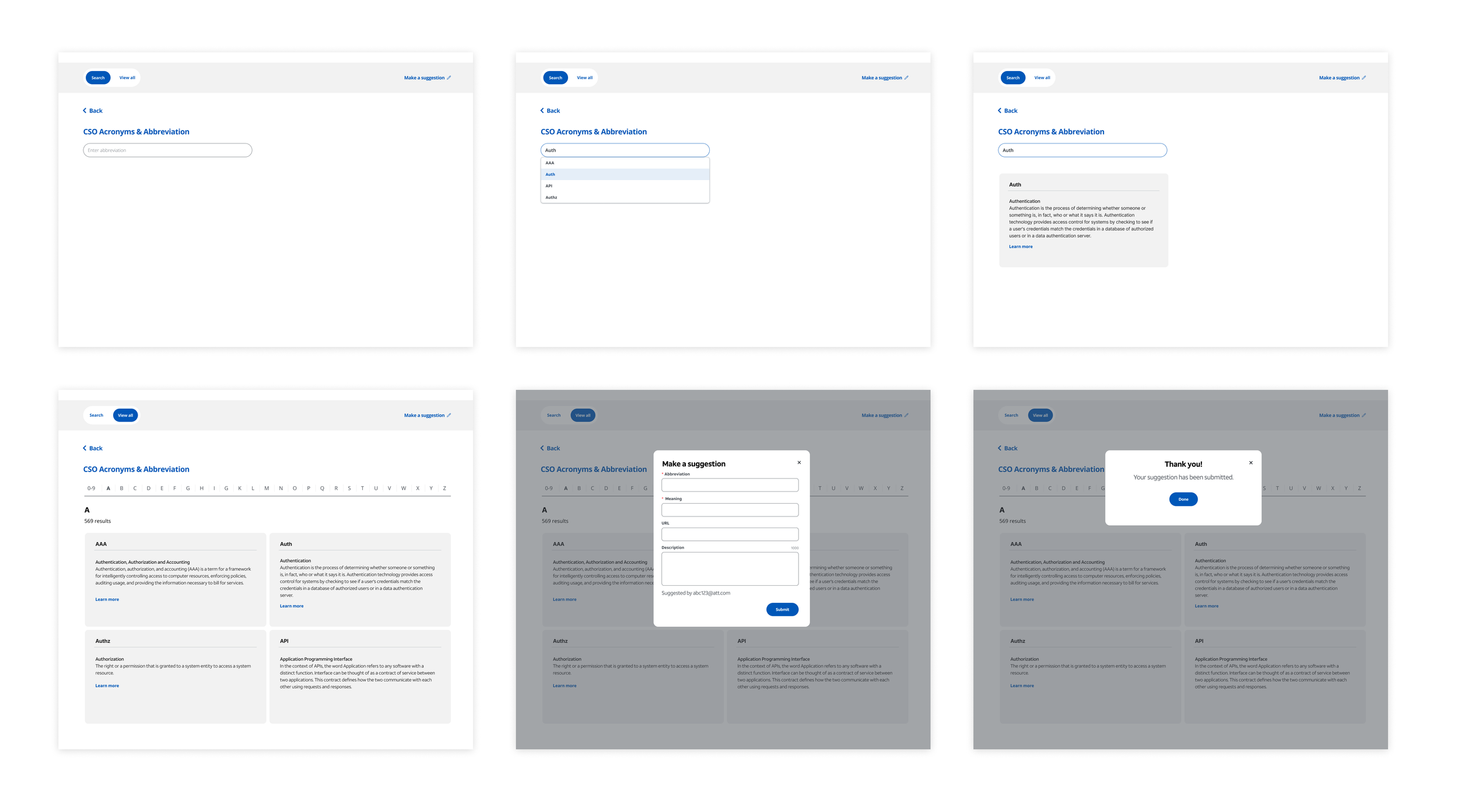
At AT&T, we embrace a unique wireframing approach that diverges from the traditional grayscale wireframes. Instead, we harness the potential of our design system components to construct wireframes that closely emulate the final prototype.
Within my role, wireframing played a crucial role in delineating the optimal flow for the abbreviation platform's onboarding process, ensuring a seamless user experience. With the wireframes in place, I seamlessly transitioned into the prototyping phase. Here, I transformed the wireframes into interactive mockups that vividly replicate the user journey. These prototypes acted as a dynamic testing ground for evaluating the design's functionality and usability, enabling me to unearth potential enhancements and intricacies in the user experience.
This iterative methodology was greatly enriched by constant collaboration with stakeholders and rigorous usability testing involving prospective users. Their insights proved invaluable in honing the wireframes and prototypes, providing clear direction in crafting an intuitive and user-friendly abbreviation platform tailored precisely to AT&T's distinctive requisites.
Development
With the foundation set through wireframing and prototyping, the project has now transitioned into the crucial development and testing phase. Our dedicated team of developers is diligently bringing the envisioned abbreviation platform to life, translating the complexity of the design into functional code.Parallelly, a rigorous testing regimen is being executed to ensure the platform's performance, security, and usability. Both automated and manual tests are being conducted to validate every aspect of the platform's functionality and to identify any potential issues or areas for improvement.
This phase is marked by close collaboration between designers, content writers, developers, and testers, as we work hand in hand to refine the user experience, address any unforeseen challenges, and ensure that the final product aligns seamlessly with our initial vision. As the development and testing progress, we remain committed to delivering an innovative and reliable abbreviation platform that will empower AT&T employees to communicate effectively and enhance interdepartmental collaboration.